

The Quiet Ways Grief Rearranges an Ordinary Life
A reflection on how grief reshapes the way we experience everyday life.

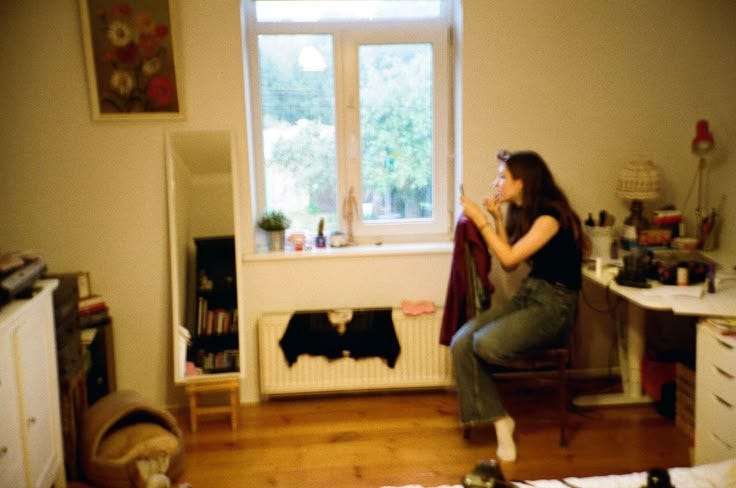
I have spent a lot of time thinking about why people say life goes on after someone dies. They are right, of course. The sun still rises. The traffic still fills the roads every morning. Cafés are still crowded. Birthdays still arrive. People still make plans for next weekend. Life continues with the same confidence it always had. I understand why people say it. What they rarely talk about is how different that same life feels to the person who has been left behind.
My best friend died in an accident, and ever since that day, I have felt like I have been living in the same world with a completely different pair of eyes. Everything I once walked past without a second thought suddenly asks for my attention. I notice conversations ending. I notice people waiting outside restaurants for someone they love. I notice two friends laughing over something that probably won’t matter tomorrow. I notice fathers dropping their children at school. I notice couples arguing in supermarkets over which cereal to buy. These moments used to disappear into the background of my day. Today they stay with me long after I have walked away.
People often imagine grief as something that lives inside anniversaries, funerals, birthdays, and old photographs. Those days are difficult, but they are expected. You wake up already knowing your heart will feel heavy. The days that catch me off guard are the ordinary ones. Tuesday afternoons. Grocery shopping. Standing in a queue. Hearing someone call a name that sounds like his. Watching a group of friends walk ahead of me while one of them keeps turning around to make sure everyone is still together. I never expected ordinary life to become the place where I would miss him the most.
There are moments when I still reach for my phone after something funny happens. My hand moves before my mind has the chance to remind me that there is nobody waiting on the other side of that conversation anymore. Habit is a strange thing. It keeps believing in people even after reality has said goodbye. Love leaves footprints inside our daily routines, and those footprints remain long after the person has disappeared from them.
Grief has also changed the way I think about time. While he was here, I believed there would always be another conversation, another late-night call, another birthday, another plan that we would eventually stop postponing. I believed tomorrow belonged to us. I think many of us live with that belief. We save words for another day. We delay visits. We assume there will always be another chance to ask one more question or tell one more story. Then life interrupts us in the only way it knows how, and every ordinary moment we rushed through suddenly becomes priceless.
A while ago, I asked my subscribers to write about grief. I wasn’t looking for advice or perfect words. I wanted to know how other people carried something that never seems to become lighter. Every person loses differently, and I have always believed there is comfort in hearing another heart speak honestly about the same pain.
One submission stayed with me. Penny Sue Denim wrote about losing her husband, and what moved me was the way she described something so ordinary that most of us would never think twice about it.
Penny Sue Denim’s essay:
Four months have passed since his death. I’ve been invited to the annual Christmas party of our “couple friends” and their families. I’m the third (or ninth) wheel this year. I would rather take up residence with my husband at the graveyard than go to the party, but my other friends have encouraged me to go despite the feeling of my soul slowly leaking from my body.
Right now, I just want to fast forward to The End.
I find a new awareness engulfing my everyday experiences. The most mundane moments are now captioned with a painful subscript; there’s a set of newly defined meanings to everything.
That is, I find myself with an awareness of Established States of Being that I was previously ignorant of. I hold membership in the Club No One Wishes to Join (one of these states of being).
The End is another worthy state of being. Sitting Together. That’s yet another. As is Perpetual Petty Envy.
I realize you wouldn’t know about these established states of being. Not unless you are in the Widows’ Club. Of course not. Neither did I.
Sitting Together haunts me. And it will haunt me for a decade, I presume, and then some. Sitting together has become a crime, an indictable offence.
Mia, our hosts’ daughter, must be about 20 now. Her sister Nora, maybe 16. They sit on either side of their dad, so casual and comfortable, as if it’s nothing. He smiles and recounts with obvious pride how his eldest is in her third year of university and now plays private gigs. He casually shares how he went to the garage to get tools to repair his younger daughter’s car and how the dog bounded through the heavy snow. Like what was noteworthy was how the dog bravely faced the elements or that his older daughter plays private gigs. Like what was most remarkable wasn’t simply the fact that he was sitting there between them. Sitting at all.
Right now, it feels like this is a “special treat” I “get” to look forward to whenever I engage in the public sphere, for the next ten years, and into perpetuity, until the state known as The End arrives.
The next day, I take my girls to the movies; to a musical, no less. Their dad—he loved movies. He loved theatres. He loved musicals. He loved his girls.
Us, at the theatre. Another version of Sitting Together.
Elphaba, green like me, watches her dreams go up in the smoke of a hot air balloon that just couldn’t quite achieve lift off, with circumstances she didn’t choose threatening to dash her every hope—and very existence—into the ground. Merciless circumstance. Her very life, up in ashes.
Elphaba accepts all the loss, moving headlong into it. And she rises, resilient and ready. And that’s largely because of the battles she’s already fought. She’s no stranger to adversity and hopeless circumstances.
Surviving and Surrender: these are the Established States of Being she invites me
After I finished reading Penny’s words, I sat with one question. What exactly changes after we lose someone? The streets remain where they have always been. The coffee tastes the same. The park near my house still fills with children every evening. Birds still land on the same trees. Rain still finds its way to the same windows. Every piece of the world seems determined to continue exactly as it did before.
The change happens inside us.
Our attention begins to travel in different directions. We stop looking at the world for what it offers and begin looking for what is missing. Every room quietly introduces itself by showing us who is absent. Every celebration carries the shape of the person who should have been there. Every happy memory carries a question that has no answer. I wonder what he would have said. I wonder if he would have laughed at this. I wonder if he would have loved this place. Those questions become faithful companions. They follow us everywhere.
There is something else grief has taught me, and I wish it had chosen another teacher. Ordinary moments never announce their importance while we are living them. The conversation you rush through today may become the one you replay for years. The coffee you drink together before work may become the memory you protect more carefully than any expensive gift. The photo you almost delete because it isn’t perfect may become the one you open whenever you miss someone’s face. Life keeps hiding its greatest treasures inside moments that seem completely ordinary.
Sometimes I think love changes after someone dies. While they are here, love is expressed through conversations, shared meals, long drives, birthday messages, and making plans. After they are gone, love finds different places to live. It settles inside memories. It waits inside songs. It appears without warning whenever you pass a place you once visited together. It survives in quiet ways that nobody else can see.
People ask whether grief becomes easier. I don’t know if I have the right answer. My days have become fuller. I laugh again. I enjoy the company of people I love. Yet every beautiful moment carries an extra thought beside it. I wish he could have seen this. I wish he had been here. Those wishes no longer surprise me. They have become part of the way I experience joy itself.
Maybe that is the greatest lesson grief leaves behind. It teaches us to pay attention. It teaches us that ordinary life deserves far more gratitude than we ever gave it. Every shared meal, every phone call, every walk home with someone you love, every goodbye that ends with “see you tomorrow” is a gift we rarely recognize while it is happening. We usually understand its value only after life has quietly taken it away.
If there is one thing I hope to carry forward, it is this. I want to stop treating ordinary moments as if they are guaranteed. I want to stay a little longer at the dinner table. I want to tell people I love them without waiting for the perfect occasion. I want to remember that the life we dream about is often already happening in front of us, hidden inside moments that seem too ordinary to matter.
Grief changed the way I look at the world. I wish it hadn’t. I wish my best friend were still here, making terrible jokes, calling at inconvenient hours, and turning another ordinary afternoon into a memory I would never think twice about. Yet his absence has left me with one truth I carry every day. Life asks us to notice it while it is still unfolding. The people we love are already giving us memories. We simply don’t know they are memories yet.
About the Co-Author:
Penny Sue Denim is a writer navigating life after the loss of her husband to cancer in 2024. Now a single mother, she writes from the tangled landscape of grief, love, forgiveness, and survival, tracing what remains after life changes beyond recognition. Her work embraces both heartbreak and hope part ember, part phoenix, part ashes, part flight. Through honest personal essays, Penny invites readers to wander beside her as she searches for meaning in what has been lost and what can still be found.
Co-Author Substack ID: Penny Sue Denim