

The Internet Made Authenticity Performative
everybody wants authenticity until it stops looking aesthetically pleasing

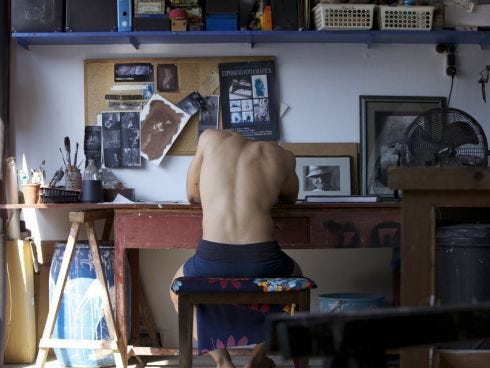
The internet made everybody hyperaware of themselves and I genuinely think people underestimate how deeply that changed human behavior. A person can barely exist anymore without subconsciously imagining how they are being perceived while existing. Every interest feels like it needs explanation. Every opinion feels like it enters a courtroom the second it gets posted. People keep saying “just be yourself” online as if the internet still allows people to have a self untouched by performance. A person opens an app and immediately enters a giant room filled with invisible strangers silently building assumptions about them from tiny fragments. One photo becomes a personality. One tweet becomes morality. One interest becomes an entire identity people assign to you forever. After enough time living inside that environment, people stop acting naturally without even realizing it. The performance becomes embedded into the body itself. People begin rehearsing their own personalities in real time.
What makes this entire thing feel exhausting is that everyone is aware of it now. Years ago people chased perfection online openly. People wanted to look rich, beautiful, successful, desired. Everything felt polished in this obvious way. Now the internet worships authenticity instead, except authenticity itself became another aesthetic people try to curate perfectly. People want to appear effortless now. Emotionally intelligent. Socially aware. Morally educated. Mysterious but relatable. Attractive but inaccessible. Messy but in a visually pleasing way. Even vulnerability feels optimized for engagement now. You read posts about heartbreak and halfway through you can almost hear the person shaping their sadness into something consumable while feeling it. You watch people cry on camera while checking whether the lighting captures their tears correctly. You see entire personalities built around appearing detached from validation while they continue posting every single day hoping strangers confirm the exact image they carefully constructed.
And honestly, I don’t even fully blame people anymore because the internet rewards performance at every level. Platforms reward identities that are easy to understand instantly. Algorithms push people toward becoming recognizable characters instead of layered human beings. Audiences expect consistency from creators even though real people contradict themselves constantly. A person can wake up feeling confident one day and completely empty the next. Human beings are unstable by nature. Emotions shift hourly. Beliefs evolve. Interests disappear and return randomly. Yet online everybody feels pressure to maintain a coherent version of themselves forever because the second somebody changes publicly people accuse them of faking who they were before. People even weaponize growth against each other now. Somebody becomes healthier emotionally and suddenly comments appear accusing them of becoming less authentic because their suffering used to feel “more real.”
That part genuinely disturbs me because it shows how deeply internet culture has distorted the way people understand authenticity itself. People think authenticity means permanent transparency now. People think being real means documenting every breakdown publicly and proving your honesty constantly to strangers who were never entitled to your inner world in the first place. Somewhere along the way humanity lost the ability to understand that privacy and authenticity can coexist together. A person keeping certain emotions to themselves does not automatically make them fake. A person enjoying beautiful things publicly does not automatically mean they are performing intelligence or depth. Yet online everything gets psychoanalyzed until basic human behavior starts feeling suspicious. Somebody reads books and suddenly people accuse them of wanting to appear intellectual. Somebody drinks matcha and suddenly it becomes a personality critique. Somebody buys a camera and people immediately reduce their entire existence into “trying too hard to look cinematic.” Every harmless interest eventually gets transformed into evidence during this giant endless trial where the internet keeps trying to determine who deserves to be considered genuine.
One of my subscribers, Noah, wrote something about this recently and while reading it I genuinely had to pause multiple times because it captured this exhausting cycle perfectly where everybody keeps accusing each other of performativity while performing their own authenticity at the exact same time. His thoughts kept sitting in my head afterward because they made me realize how impossible authenticity becomes once human beings become overly aware of being watched all the time.
NOAH’S ESSAY HERE:
Performativity discourse on the internet is very common. It has become a trend to analyse a person’s actions and posts to try and weed out the real from the fake; this has always been the case, however, in recent times we have simply become more self-aware. We see things like the performative male trend that clearly mention this idea of performance in relation to the internet and relationships with others. The performative male reads feminist literature, drinks matcha, and engages with physical media—all things that are not inherently performative, but coupled with the patriarchal motive to “trick” women into seeing them in a romantic light, they become fake, and so our idea of this performance seeps into our perception of the objects and actions themselves. And so we now grapple with the fact that reading and tea are associated with performance and that they are just generally enjoyable things. The reaction to the performative male trend is a clear sign that anything can become performative if too many of a certain type of person tie their aesthetic identity to it, and thus everything a person does, thinks, and consumes can be labelled performative to an extent.
What does it mean to be performative?
The word performative has gained a new meaning recently; we used to just associate it with a show for an audience, but now that definition has limited itself to the motives behind an action and simultaneously expanded to the social implications of any specific action. I ask myself, is it really performative if you’re doing the thing? Under this new definition, the answer is yes, depending on your motive and what that thing is, and under the old definition, the answer would be yes, depending on if there was an aspect of an audience. The thing with the internet, and more specifically social media, is that there will always be an audience, and so everything is technically performative; you could even argue that everything one does in the company of other people counts as performative, depending on our definition of “audience.” We have clearly labelled some performative and others authentic, but because we are all performing for the internet anytime we post anything, a new type of poster enters the picture: a person whose sole point of existence on the internet is to prove to the audience that they are not performing, that they are not being tricked. This is impossible because social media is built on audiences and performers.
The capitalistic elephant in the room:
As economic inequality grows and the rich make more money while the poor stay poor, the masses start to look for more ways to separate themselves from the working class. Because becoming rich and successful has gotten a lot harder, people turn to alternative ways of feeling better than everyone else. Performative intellectualism can come from that insecurity of feeling lesser; when people classify someone as a performative intellectual, some other people might look at them and say, “I’m not like that at all; I’m actually smart, I actually think for myself, and so I am better than this person.” That person then gets called performative for sharing a sense of superiority for being authentic. It becomes this never-ending loop of people calling each other performative; this thus reinforces the notion that anything can be performative if it exists in front of an audience.
Performative authenticity is a symptom of a very self-aware society and the very structure of the internet. We are all performing; some just claim not to be, so much so that it becomes viewed as even more performative.
After reading Noah’s piece I kept thinking about how terrifying self-awareness becomes when it reaches this level. Human beings were never supposed to observe themselves constantly from an outside perspective. Social media turned people into both the performer and the audience simultaneously. People live through experiences while mentally standing outside themselves analyzing how the experience appears in real time. Somebody goes on vacation and immediately starts thinking about photos before memories. Somebody falls in love and subconsciously imagines captions before emotions fully settle inside their body. Somebody experiences grief and eventually feels pressure to articulate it beautifully online because raw pain alone no longer feels complete unless it becomes visible to other people. Entire lives started feeling partially unfinished until they are witnessed publicly somehow.
And maybe that’s why everybody feels exhausted lately in this very specific emotional way nobody fully knows how to explain. People keep saying they feel disconnected from themselves while spending more time displaying themselves than ever before. People keep saying they feel emotionally numb while constantly sharing emotions publicly. People keep saying they crave genuine connection while filtering every interaction through layers of irony, self-awareness, aesthetic presentation, and fear of embarrassment. Entire generations became terrified of sincerity because sincerity feels dangerous online now. Caring openly became embarrassing. Enjoying things innocently became embarrassing. Wanting connection became embarrassing. Even passion itself gets mocked immediately unless wrapped inside enough self-awareness to protect the person expressing it.
That’s why everybody talks in this detached tone online now. Everybody wants emotional distance from their own humanity before somebody else uses it against them. People intentionally underplay excitement. People pretend they do not care deeply even while craving connection desperately. People hide behind jokes while discussing loneliness. People post things “ironically” until they genuinely forget whether they actually mean them anymore. The internet convinced people that appearing unaffected equals intelligence or Maturity. Meanwhile some of the emptiest people I’ve ever seen online are the ones performing emotional detachment every second because they are terrified somebody might witness how badly they want to be loved, understood, admired, chosen, validated, or remembered.
And capitalism feeds this entire thing constantly because modern internet culture transformed identity itself into a product. People market personalities now. Entire lifestyles become brands. Human beings package themselves into digestible aesthetics and sell those versions socially for validation, status, opportunities, or survival. Teenagers barely old enough to understand themselves already feel pressure to create personal brands online. People curate bedrooms, music tastes, political beliefs, relationships, hobbies, clothing, emotional struggles, and even healing journeys into consumable presentations. Everybody becomes content eventually. Everybody becomes visible eventually. Everybody becomes searchable eventually. I genuinely think people underestimate what that does psychologically to a human being over time.
Somewhere deep down I think many people secretly miss existing without feeling observed constantly. People miss having thoughts that disappear instead of becoming posts. People miss enjoying meals without photographing them. People miss laughing without imagining how they look while laughing. People miss dressing for comfort instead of perception. People miss talking without mentally editing themselves sentence by sentence. A huge part of modern anxiety comes from this endless self-monitoring people perform unconsciously now. Human beings became trapped inside mirrors they carry everywhere.
And honestly I feel angry sometimes because life itself is already hard enough without this extra layer of performance attached to existence constantly. Human beings are already insecure creatures naturally. People already worry about acceptance, love, rejection, purpose, beauty, intelligence, success. The internet amplified every insecurity until people started building entire personalities around managing perception instead of actually living. A person can spend hours trying to appear authentic online while becoming completely disconnected from what they genuinely feel privately. That contradiction destroys people mentally over time. You can feel it happening everywhere now. Everybody feels overstimulated, hypervisible, emotionally drained, disconnected from themselves, addicted to attention, terrified of judgment, desperate for validation, ashamed for wanting validation, and exhausted from maintaining versions of themselves constantly.
And still, despite all of this, I don’t think human beings actually want fame as much as they think they do. I think people want permission to exist without being misunderstood. I think people want intimacy without performance. I think people want relationships where they do not need to market themselves constantly. I think people want spaces where they can say something imperfectly without strangers dissecting every word for hidden motives. I think people want to return to themselves again beneath all the presentation and noise and branding and self-awareness and algorithms and performance.
Maybe authenticity was never something people were supposed to prove publicly at all. Maybe the realest parts of a person are usually the parts untouched by audiences completely. The conversations nobody documents. The interests nobody monetizes. The emotions nobody translates into captions. The moments where a person forgets they are being perceived entirely and finally feels present inside their own life again.
Co-Author Substack ID: Noah
If you’d like to submit a piece to be featured in a future postcard, you can check the submission guidelines here: Submit your Essays
If you’d like to support me, you can: Buy me a coffee.
Wow!! Your piece was so great and I loved how you took a more human and personal approche to a topic where seeing people as less than others is a feature, the medium is the message after all. Writing this was super fun and thanks for having me as a co author!
WHAT. this is TOO beautiful. pls be my therapist.